

At RJ Tech, our Computer Vision Services in the UK empower businesses to harness advanced image and video intelligence for real-time automation and improved accuracy. We build tailored solutions for object detection, facial recognition, quality inspection, and data extraction, helping organisations optimise operations. With deep expertise and scalable deployment, our computer vision specialists ensure seamless integration, enhanced performance, and measurable digital transformation across diverse industries.

Our Computer Vision services empower businesses to analyze visual data, uncover actionable insights, and automate processes with tailored solutions. From image classification and object tracking to video intelligence and visual inspection, our solutions improve efficiency, foster innovation, and integrate seamlessly—delivering tangible results and a competitive edge in today’s fast-paced digital landscape.
Deploying Computer Vision solutions can be complex, but our experienced team makes the process seamless from strategy to execution. We partner with you to build smart visual intelligence systems tailored to your business goals, ensuring real results. By combining advanced image and video analysis, actionable insights, and industry expertise, we deliver solutions that optimize decision-making, automate processes, and accelerate growth across your organization.
Traditional computer vision models often struggle to detect tiny or partially hidden objects within complex scenes, leading to missed detections and unreliable outputs. These limitations become more evident in crowded environments or poor-quality footage, where subtle features are easily overlooked. Such gaps reduce the accuracy of automated systems and limit their effectiveness in safety-critical or high-precision applications that depend on consistent object identification.

We apply multi-scale detection methods, advanced feature extraction, and fine-tuned deep learning architectures designed to capture even the smallest or partially obscured objects. By enhancing sensitivity to subtle visual cues and refining model attention mechanisms, we ensure improved accuracy across challenging environments. This approach delivers reliable recognition performance for applications requiring precision, consistency, and dependable detection under varied visual conditions.
Computer vision models often perform poorly when faced with changing lighting, weather, or background conditions, which significantly impact image quality and consistency. These variations can confuse algorithms, reducing detection accuracy and limiting real-world deployment. Without robust adaptation, models may fail to interpret scenes correctly, resulting in inconsistent performance across different environments or unpredictable operational scenarios.

We incorporate adaptive learning techniques, domain randomisation, and extensive data augmentation to prepare models for diverse environmental conditions. By simulating varied lighting, weather, and background settings during training, we enhance resilience and generalisation. This ensures your computer vision system delivers stable, accurate performance regardless of environmental changes, enabling reliable real-world use across multiple situations and operational contexts.
Imbalanced datasets, where certain object classes appear far more frequently than others, often cause models to favour dominant categories. This leads to biased predictions, reduced accuracy for rare classes, and an overall decline in model fairness. Such imbalances hinder performance in applications requiring equal attention to all object types, weakening the reliability of automated classification or detection systems.

We address data imbalance through strategic resampling, targeted dataset curation, and high-quality synthetic data generation. By creating a more even representation of classes, we improve fairness and ensure stronger recognition of underrepresented categories. These techniques enhance model reliability, reduce classification bias, and deliver more accurate results across all object types, even those that appear infrequently in real-world datasets.
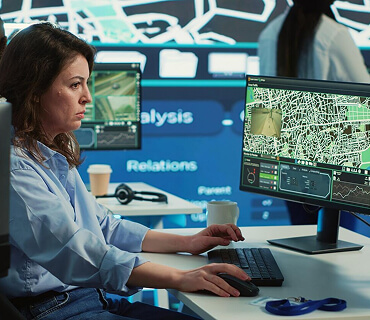
Maintaining object identity in video sequences becomes challenging when objects move rapidly, overlap, or become temporarily obscured. Standard models may lose track, causing inconsistencies that impact real-time decision-making. This is especially problematic in surveillance, autonomous systems, or industrial automation, where accurate, continuous tracking is essential for safety, efficiency, and reliable situational awareness.
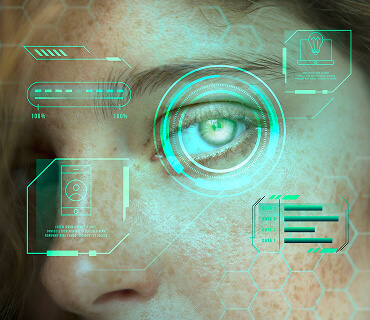
We use state-of-the-art tracking algorithms, motion prediction models, and robust re-identification techniques to maintain object continuity across frames. Our approach enables accurate tracking even during occlusions or rapid movement. By combining temporal analysis with spatial consistency checks, we ensure reliable, uninterrupted monitoring that supports real-time applications and enhances the overall stability of your video-based AI systems.

High rates of false positives and false negatives can create serious consequences in critical applications, leading to incorrect alerts or missed detections. These errors undermine trust, reduce system reliability, and compromise decision-making. In industries such as healthcare, security, and manufacturing, even minor inaccuracies can generate operational risks and significantly impact outcomes.

We minimise misclassifications by applying ensemble modelling, precision-tuned thresholds, and rigorous validation processes. Through continuous performance analysis and targeted refinement, we ensure balanced sensitivity and specificity. This comprehensive approach reduces error rates, enhances prediction confidence, and strengthens overall model reliability, delivering trustworthy results for applications where accuracy and consistency are essential.
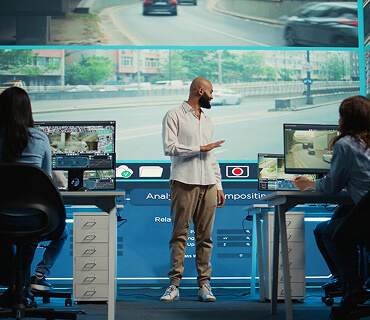
Understanding crowded scenes, overlapping objects, or visually dense environments presents a major challenge for many vision models. These complexities can lead to object confusion, inaccurate segmentation, or incomplete interpretations. Without advanced contextual awareness, systems may struggle to recognise relationships between objects, reducing the quality and usefulness of visual insights in real-world applications.
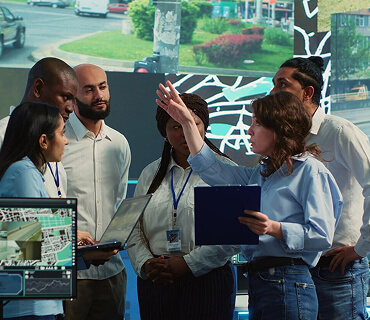
We employ semantic segmentation, instance recognition, and context-aware architectures to interpret visually complex scenes with greater precision. By analysing spatial relationships and environmental context, our models can identify overlapping or densely packed objects more accurately. This results in richer scene understanding, enhanced detection quality, and improved decision-making across applications that rely on detailed visual interpretation.
High-quality annotated datasets are often difficult, expensive, or time-consuming to produce, limiting the ability to train effective computer vision models. Without sufficient labelled data, models may struggle to generalise, leading to poor performance and unreliable predictions. This issue becomes especially significant for specialised applications where domain-specific images are scarce or inconsistently labelled.
We use transfer learning, semi-supervised methods, and synthetic data generation to overcome limited annotation challenges. By leveraging pre-trained models and augmenting datasets with realistic, artificially created samples, we reduce dependency on large labelled collections. This approach accelerates development, enhances generalisation, and ensures strong model performance even with minimal high-quality annotated data.

Training and deploying deep computer vision models often require substantial computing power, resulting in high costs, long processing times, and increased energy consumption. For many organisations, these demands limit scalability and slow adoption. Without optimisation, systems may become too expensive or inefficient to operate effectively at scale or in real-time environments.

We reduce computational demands through model pruning, quantisation, efficient architecture selection, and optimised cloud-based deployment strategies. These techniques maintain high accuracy while cutting resource usage, enabling faster processing and more cost-effective operations. This ensures your computer vision solutions remain scalable, efficient, and practical for real-time or large-scale applications without compromising performance.

Computer vision outputs must integrate seamlessly with existing business workflows to deliver meaningful value, yet many organisations struggle with technical compatibility or process alignment. Poor integration can delay implementation, create data silos, and restrict the impact of visual intelligence. Without smooth workflow embedding, AI initiatives may fail to deliver expected operational improvements.
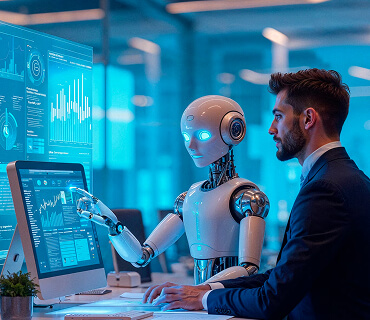
We develop modular APIs, automated pipelines, and tailored integration frameworks that embed computer vision insights directly into your operational systems. Our approach ensures smooth data flow, minimal disruption, and strong alignment with business processes. This enables actionable visual intelligence to support decision-making, streamline workflows, and deliver measurable improvements across relevant functions.

Over time, computer vision models may degrade due to evolving data patterns, environmental changes, or new object types, reducing accuracy and reliability. Without continuous monitoring, performance issues can go unnoticed and negatively affect critical applications. This drift creates long-term risks and limits the sustainability of AI-driven solutions.
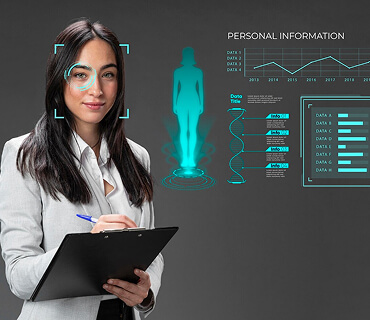
We implement continuous monitoring, automated retraining pipelines, and regular performance evaluations to maintain long-term model accuracy. By detecting data drift early and updating models proactively, we ensure stable, reliable performance across changing conditions. This approach keeps your computer vision systems aligned with real-world requirements, enabling consistent operational value and dependable results over time.
Computer Vision Services enable machines to analyse and understand visual information from images or videos. We develop intelligent systems that can detect, identify, and interpret objects, faces, and patterns automatically.
We offer a wide range of solutions including image recognition, facial detection, object tracking, visual inspection, OCR (Optical Character Recognition), and real-time video analytics tailored to your business needs.
Computer Vision can automate visual tasks, enhance quality control, strengthen security systems, and improve customer experiences. It helps businesses save time, reduce human error, and make data-driven visual decisions.
Yes, we design and develop custom Computer Vision models that fit your business requirements. Whether it’s retail analytics, manufacturing automation, or surveillance, we build solutions that deliver accurate and scalable results.
Absolutely. We ensure seamless integration of our Computer Vision models with your current systems, cameras, IoT devices, or software platforms to maintain smooth operations.
Our models are trained with advanced algorithms and large datasets to ensure high accuracy and reliability. We also conduct regular testing and fine-tuning to maintain consistent performance in real-world scenarios.
You can get started by scheduling a consultation. We’ll understand your goals, evaluate your data and infrastructure, and create a step-by-step plan to implement a custom Computer Vision solution for your business.
RJ Tech has proudly delivered innovative digital solutions to 50+ growing businesses across multiple industries. From startups to established enterprises, we have supported companies with customised technology services that drive measurable growth and long-term success.
 Vanilla PHP
Laravel
Shopify
Python
Flutter
React JS
WordPress
WooCommerce
Node JS


